
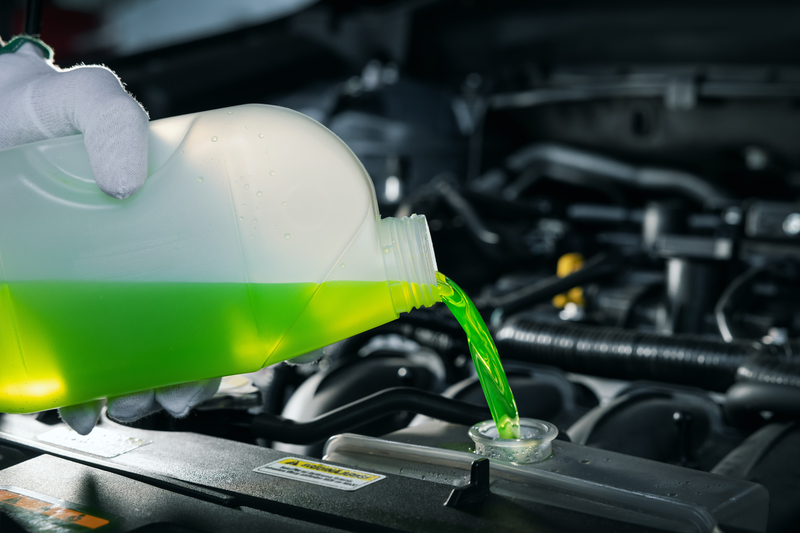
Antifreeze is essential during the colder months due to its main function of regulating the temperature of a car’s engine. This important additive helps to prevent cracking in the engine components when the water inside the engine freezes during cold months. During the summer months, it helps cool down the engine to prevent overheating. Antifreeze was commercialized in the 1920’s using alcohol due to the lower molecular weight which equates to a lower freezing point when mixed with water. Below is a more in-depth reference guide on the components that go into making antifreeze and the importance of this product.
Water
Water plays a key role in antifreeze as it is used to dilute the concentrate. The ratio with the concentrate is about 50/50 and diluted depending on the typical weather conditions. For example, in a state like Wisconsin where negative temperatures are more common, one might do a 70/30 mixture. 70% antifreeze and 30% water.
Importance of Glycol’s
Glycols are another important component of antifreeze. The glycols react with the water molecules to create colligative properties (the physical properties that are dependent on the molecules in the solution.) These properties affect the freezing and boiling point of the solution. The glycol molecules form a rigid crystal structure that keeps the mixture as a liquid. Ethylene glycol and propylene glycol are the most used.
Choosing between the two of these is about preference. Ethylene glycol is more thermally efficient due to its low viscosity, and it is less expensive. Propylene glycol is more expensive and less thermally efficient but is not as toxic as ethylene glycol while also being biodegradable.
Additive Packages
Commonly known as “Ad Packs”. Additive packages are a mix of concentrated chemicals to help with creating specific formulations. The Organic Acid Technology (OAT) ad pack contains corrosion inhibitors like azoles and carboxylates. These inhibitors are used to help prevent rust and scale on engine metals. Common azoles include tolyltriazole, benzotriazole and sodium tolyltriazole 50%. Carboxylates include sodium benzoate, 2-ethylhexanoic acid and sebacic acid. Other additive packages include Hybrid-OAT, Phosphated HOAT, and Inorganic Additive Technology (IAT). These formulations have a combination of organic acids, silicates and phosphates. The type used depends on the engine design and manufacturer specifications. Another common additive for antifreeze is a bittering agent such as denatonium benzoate, which is used to make the sweet-tasting but poisonous ethylene glycol unpalatable to animals or children.
Dyes
When blended antifreeze does not turn pink or orange, it is typically colorless or nearly colorless. Manufacturers add the dye to help distinguish it from other products in your car to help identify leaks. In the past the color was an indicator of the chemical makeup of the antifreeze. In some cases, the dyes can also help to indicate the condition of the coolant or contamination.
Basic Formula
Antifreeze is a product in which the basics haven’t changed a lot since the 1920s when it was first commercialized. Below is a reference of the composition and their typical weight.
Glycol Base: >90%
Additives: 5-7%
Water: 3-5%
Dyes: <1%
Testing Antifreeze
After mixing an antifreeze product, testing is the next step to ensure quality and performance. Essential tests include pH, freezing point, boiling point and density. Analytical techniques such as HPLC (high performance liquid chromatography) can be used to measure corrosion inhibitor levels and analyze additive concentrations.
Conclusion
Through the combination of water, glycols, and additive packages, formulators create a product that helps protect engines from freezing, overheating, corrosion and even long-term wear. Understanding the role each component plays provides a strong foundation to develop an antifreeze product that is reliable and effective. While the basics of antifreeze have not changed much since their commercialization, formulations continue to evolve alongside manufacturing requirements and engine designs. As a result, antifreeze remains essential throughout the industry.