
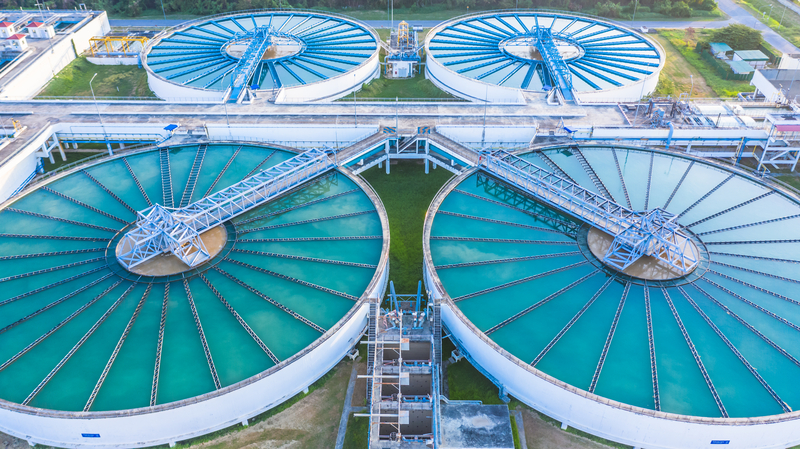
Water is one of the most widely used resources in manufacturing. Whether it’s being used to cool equipment, generate steam, clean production lines, or become part of the final product, water often contains impurities that can impact efficiency, safety, and product quality.
Water treatment is the process of improving water quality for a specific application. Because every manufacturing process has different requirements, there is no one-size-fits-all approach. Instead, manufacturers rely on a variety of specialty chemicals to solve specific water quality challenges.
Cooling Water Treatment
Cooling towers and closed-loop cooling systems continuously circulate water to remove heat from industrial equipment. Over time, dissolved minerals, oxygen, and microorganisms can reduce system performance by causing scale, corrosion, and biological fouling. Proper cooling water treatment helps reduce maintenance costs, improve energy efficiency, and minimize unexpected downtime.
Common Cooling Water Chemistries
| Chemical Type | Typical Chemistries | Primary Function |
| Scale Inhibitors | Phosphonates, Polyacrylates, Organophosphates | Prevent calcium carbonate and mineral scale |
| Corrosion Inhibitors | Sodium Nitrite, Molybdates, Zinc Salts, Orthophosphates, Tolyltriazole | Protect steel, copper, and mixed metal systems |
| Biocides (Oxidizing) | Sodium Hypochlorite, Bromine, Chlorine Dioxide | Kill bacteria and algae |
| Biocides (Non-Oxidizing) | Isothiazolinones, Glutaraldehyde, DBNPA | Control biofilm and resistant microorganisms |
| Dispersants | Polymeric Dispersants | Keep suspended solids from depositing |
| Defoamers | Silicone and Non-Silicone Antifoams | Reduce foam formation |
Boiler Water Treatment
Boilers operate under high temperatures and pressures, making water purity critical. Even small amounts of hardness or dissolved oxygen can cause scale buildup, corrosion, and reduced heat transfer efficiency.
Common Boiler Water Chemistries
| Chemical Type | Typical Chemistries | Primary Function |
| Oxygen Scavengers | Sodium Sulfite, Carbohydrazide, DEHA, Hydroquinone | Remove dissolved oxygen |
| Alkalinity Builders | Sodium Hydroxide, Sodium Carbonate | Maintain proper pH |
| Scale Inhibitors | Polyphosphates, Phosphonates | Prevent mineral deposition |
| Sludge Conditioners | Polymer Dispersants | Keep solids suspended for blowdown |
| Condensate Corrosion Inhibitors | Neutralizing Amines, Filming Amines | Protect condensate return systems |
Process Water Treatment
Process water requirements vary significantly depending on the industry. Water may require treatment to protect equipment, ensure product quality, or meet purity specifications.
Common Process Water Chemistries
| Chemical Type | Typical Chemistries | Primary Function |
| pH Adjusters | Sulfuric Acid, Hydrochloric Acid, Sodium Hydroxide | Control process pH |
| Coagulants | Aluminum Sulfate (Alum), Ferric Chloride, PAC | Remove suspended solids |
| Flocculants | Polyacrylamides | Aggregate fine particles |
| Activated Carbon | Powdered or Granular Carbon | Remove organics, taste, and odor |
| Ion Exchange Resins | Cation and Anion Resins | Remove dissolved ions |
| Reverse Osmosis Antiscalants | Organophosphonates, Specialty Polymers | Protect RO membranes |
Wastewater Treatment
Industrial wastewater contains a wide range of contaminants that must be removed before discharge or reuse. Chemical treatment improves treatment efficiency and helps facilities comply with environmental regulations.
Common Wastewater Treatment Chemistries
| Chemical Type | Typical Chemistries | Primary Function |
| Coagulants | Ferric Chloride, Aluminum Sulfate, PAC | Destabilize suspended particles |
| Flocculants | Cationic, Anionic, and Nonionic Polymers | Form larger settleable flocs |
| Neutralizing Agents | Sulfuric Acid, Sodium Hydroxide, Lime | Adjust wastewater pH |
| Oxidizers | Hydrogen Peroxide, Sodium Hypochlorite, Potassium Permanganate | Destroy contaminants and odors |
| Reducing Agents | Sodium Bisulfite, Sodium Metabisulfite | Remove residual oxidizers |
| Defoamers | Silicone and Organic Defoamers | Control foam during treatment |
Potable (Drinking) Water Treatment
Water intended for human consumption must meet strict health and safety standards. Treatment focuses on removing pathogens, suspended solids, and contaminants while protecting distribution infrastructure.
Common Potable Water Chemistries
| Chemical Type | Typical Chemistries | Primary Function |
| Coagulants | Aluminum Sulfate, Ferric Chloride, PAC | Remove suspended solids |
| Disinfectants | Chlorine, Sodium Hypochlorite, Calcium Hypochlorite, Chloramines, Chlorine Dioxide | Destroy pathogens |
| Fluoridation Chemicals | Hydrofluorosilicic Acid, Sodium Fluoride | Promote dental health (where applicable) |
| pH Adjustment | Lime, Sodium Hydroxide, Carbon Dioxide | Stabilize water chemistry |
| Corrosion Inhibitors | Orthophosphates | Protect municipal distribution systems |
Why Water Treatment Chemicals Matter
Each water system presents unique challenges based on water source, equipment, operating conditions, and regulatory requirements. Selecting the proper treatment chemistry can help manufacturers:
- Improve equipment reliability
- Extend asset life
- Reduce maintenance costs
- Lower energy consumption
- Improve product quality
- Minimize downtime
- Meet environmental and regulatory compliance requirements
Working with an experienced chemical supplier helps facilities identify the most effective treatment program while ensuring a reliable supply of quality raw materials.
How ChemCeed Supports Industrial Water Treatment
ChemCeed supplies a broad portfolio of chemical raw materials used throughout industrial water treatment applications. Our product offering includes corrosion inhibitors, reducing agents, defoamers, pH control chemicals, coagulants, flocculants, oxidizers, and other specialty chemistries that support cooling water, boiler water, process water, and wastewater treatment systems.
Whether you’re formulating treatment products or sourcing raw materials for industrial operations, ChemCeed provides dependable supply, technical expertise, and responsive customer service to help keep your systems operating at peak performance.