
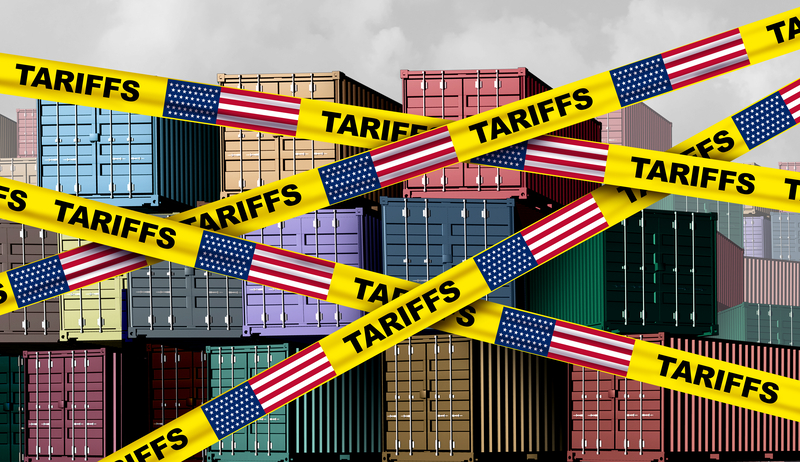
President Donald Trump made headlines on July 12, 2025, by announcing sweeping 30% tariffs on imports from the European Union and Mexico, set to take effect on August 1. Positioned as a measure to protect national security and rebalance trade relationships, the announcement has already sparked diplomatic backlash and market volatility. The tariffs cover a broad range of goods, including automobiles, steel, agricultural products, pharmaceuticals, electronics, and luxury items.
Markets responded quickly but with measured concern. U.S. stock futures dipped modestly, the Mexican peso weakened, and investors shifted cautiously toward safe-haven assets. While the market reaction was less severe than during past trade conflicts, the announcement has injected fresh uncertainty into an already delicate global economic landscape. Many analysts interpret the tariffs as a high-stakes negotiating tactic, yet warn that if enacted, they could disrupt supply chains and reignite inflationary pressures, particularly on imported consumer goods like cars, electronics, and specialty foods.
The diplomatic fallout was swift. European Union trade ministers met on July 14 and condemned the tariffs as unjustified and unacceptable. The EU is preparing €72 billion in retaliatory tariffs targeting U.S. exports, including iconic products like bourbon and motorcycles, though they have held off implementation in hopes of resolving the conflict through dialogue before the August deadline. As the U.S. tightens its stance, both the EU and South Korea have accelerated efforts to negotiate bilateral trade agreements with Washington in hopes of softening the blow and securing exemptions for key industries.
Within the U.S., the tariffs could have far-reaching implications. Companies that rely on components and materials from the EU and Mexico—especially in manufacturing, agriculture, and automotive sectors—are preparing for cost increases and potential supply disruptions. Consumers, already sensitive to price fluctuations following several years of inflation, may see another wave of price hikes if the tariffs are enacted. The political calculus is also shifting. While some lawmakers support the tougher stance, others from both parties have raised concerns about the economic consequences and the risk of alienating critical allies.
As of mid-July, negotiations are ongoing, and markets are watching closely. Whether these tariffs ultimately materialize or serve as leverage for new trade agreements remains to be seen. What is clear, however, is that Trump’s aggressive trade posture has reignited global tensions and introduced a new round of uncertainty into the international economic order. The countdown to August 1 will be closely monitored, with the potential for a major shift in U.S. trade relations hanging in the balance.
Proposed Tariff Levels by Country
-
European Union (30%)
-
Mexico (30%)
-
Canada (35%)
-
Algeria (30%)
-
Brazil (50%)
-
Brunei (25%)
-
Iraq (30%)
-
Libya (30%)
-
Moldova (25%)
-
Philippines (20%)
-
Sri Lanka (30%)