
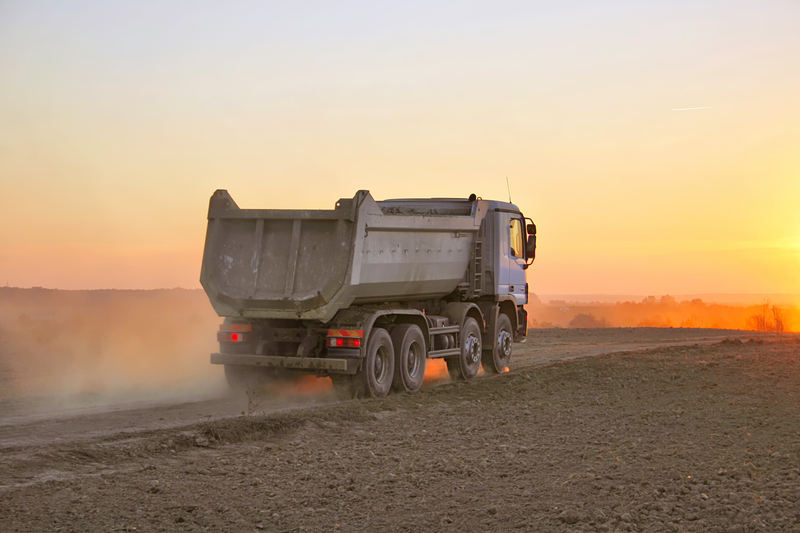
Summer is heating up, and that means so are the roads. Unpaved roads often become problematic during the dry summer months due to dust, which reduces visibility, air quality, and can also degrade the road surface. Municipalities often apply dust control methods to extend the life of the road.
Calcium chloride is a non-toxic salt that is one of the most effective methods for suppressing dust on roadways. Due to its hydroscopic nature, it attracts moisture from the air and helps keep the road surface damp. It also resists evaporation by holding on to moisture even during the hottest and driest days. The product is also long lasting, so a single application is sometimes enough to last the entire year. If it is applied annually, the calcium chloride becomes established deeper into the road base, creating improved stability in the roadway and preventing further damage.
Forms of Calcium Chloride
Calcium chloride comes in different forms, and all three can be used for dust control. When choosing which product is best for you, consider the different storage requirements, mixing capabilities, equipment needed for application, and the cost of each option. Below are three Calcium Chloride options offered by ChemCeed:
- Calcium Chloride Flakes – This option comes in bags and the calcium chloride of the material is usually 77% to 80%.
- Calcium Chloride Pellets – This option comes in bags and contains a higher percentage of of calcium chloride, usually 94% to 97%.
- Calcium Chloride Liquid– The product is often delivered in bulk tank trucks or packaged into IBC totes. The liquid product can be mixed to various percentages such as 32%, 35%, and 38%.
How to Apply Calcium Chloride for Dust Control
 It is first necessary to make sure the roadway is prepared for the Calcium Chloride application. Late spring is often the best time to apply, as the road still has enough moisture retained and the humidity is high. If rain has not fallen recently, it is best to water the road surface before application. The road should be worked and bladed to remove any ruts, washouts, potholes, and mix in loose aggregate. The road should also have good drainage, with a properly shaped crown, as well as ditches, shoulders, and culverts that are shaped and cleaned. Do not apply during heavy rain, as this may cause the material to wash away.
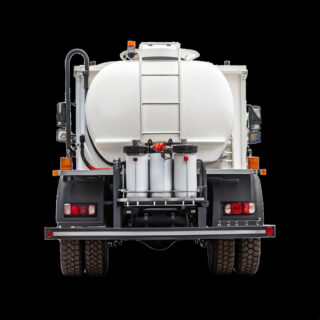
To apply the dry Calcium Chloride products (Flakes & Pellets) you can use lime drill spreaders, tailgate spreaders, or basic disc spreaders. You can also choose to blend the dry product into liquid for spraying. Keep in mind that dissolving Calcium Chloride is exothermic, so it will produce heat when doing so and you will need to take proper precautions. Liquid Calcium Chloride can be applied by tanker trucks with spay bars, or even hand-held sprayers. Any equipment used should be cleaned thoroughly after application to prevent residue from building up.
Wondering how much calcium chloride you should apply? If the road has not been treated before, it might require more than roads that are treated annually. A good rule of thumb is to use 1 to 1.5 pounds of flake per square yard for newly treated roads, and .5 to 1 pound of flake per square yard for roads treated the previous year. Make sure to apply the product evenly over the surface of the road to ensure proper coverage. The product should be applied so that it will penetrate the top later to bind with the soil to form a layer preventing the particles from becoming airborne (liquid dust suppressant should penetrate 3/8 to 3/4 inches into the surface). Use of rakes, brooms, or other methods to work the product into the surface may be useful for loose gravel roads.
How Often To Apply Calcium Chloride
Most of the time, one application of Calcium Chloride will last for an entire year, however that is dependent on the environment. Roads with high traffic, heavy truck traffic, or exposure to extreme weather conditions might need more frequent applications. Extremely dry conditions can diminish the effects of Calcium Chloride over time, but when it rains, it can help reactivate the solution.
Re-application can be done in late summer or early fall as needed. It is best practice to treat the roads during the early morning hours. Make sure to allow sufficient time for the Calcium Chloride to dry and set before allowing traffic on the roadway.
Start Dust Suppression with ChemCeed
ChemCeed supplies high-quality Calcium Chloride for dust suppression. We offer a variety of solutions including delivery and application. Please contact your ChemCeed sales representative to receive a quote today!